- Маералы
- Возможнос прмененя
- Bus Passenger Safety Success Story
With AI On Board, Passenger Safety Rides High
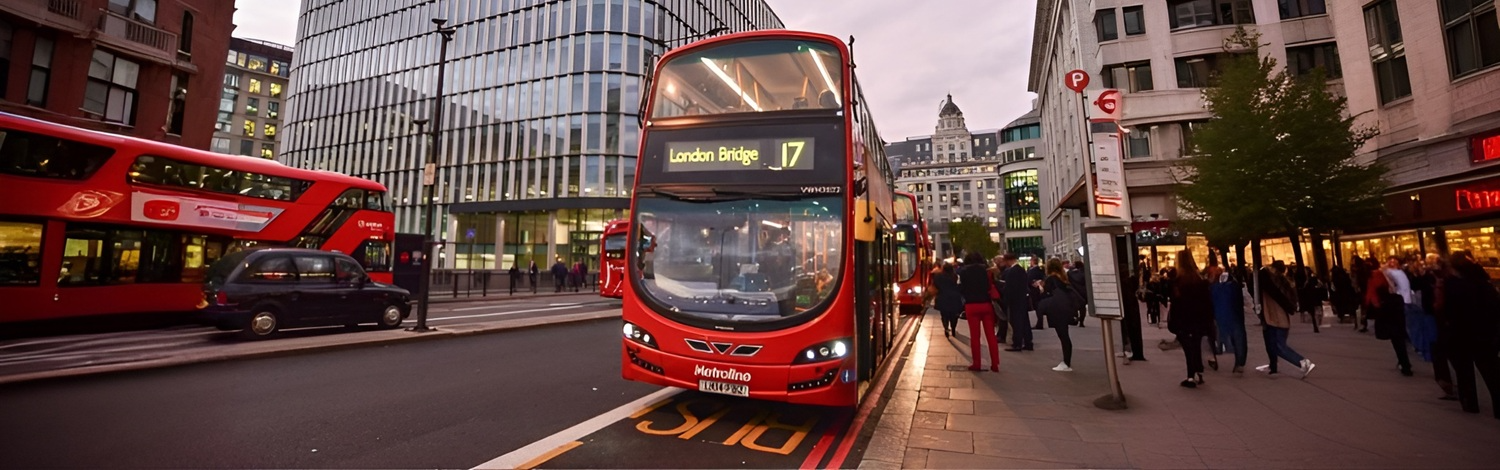
The majority of trains, buses, and trams are designed to accommodate both seated and standing passengers. However, on the iconic double-decker bus, standing passengers on upper decks change the vehicle’s center of gravity, affecting stability when turning and increasing the risk of passengers falling. As such, policies specifying that the upper deck of such vehicles is reserved for seated passengers only are near universal. However, the methods employed to ensure compliance with this rule are not.
While CCTV has been common on buses for a number of years now, relying solely on drivers to monitor compliance while driving is not ideal. As such, one public transport provider came to AAEON with a plan to pair in-vehicle cameras with edge AI analytics to reinforce passenger safety on double-decker buses.
Finding the Right Engine for the Project
The customer’s proposed application required an embedded PC on board each bus in its fleet, with multiple connected cameras located on the upper deck of each bus to ensure 360° coverage. As the application’s aim was to automatically monitor and reinforce passenger safety, the system would also need to be capable of executing real-time YOLO inference at the edge, sending alerts to the driver in the event a passenger was not seated.
Key Considerations
- Given the dynamic nature of public transportation, the system needed to be able to run YOLO inference at the edge with minimal latency.
- Because it would be deployed in a high-vibration, vehicle-powered environment, the chosen embedded solution would need to be extremely robust and resilient.
- With over 70 buses in their fleet, the customer wanted the system to be easily integrated into existing setups, requiring minimal configuration to get up and running.
The Driver: The BOXER-8623AI
It is rare to find a product that matches each and every specification required by an application, but this case was an exception. As soon as AAEON proposed its BOXER-8623AI, an AI@Edge Compact Fanless Embedded AI System powered by the NVIDIA® Jetson Orin Nano™, the customer was optimistic about its suitability.
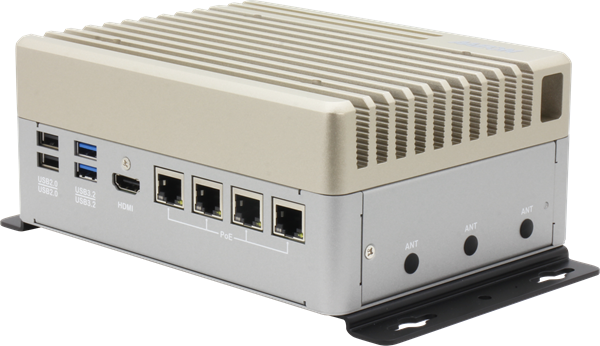
The BOXER-8623AI was the perfect match for the AI performance required by the customer’s safety monitoring application. Typically powered by the NVIDIA Jetson Orin Nano module with NVIDIA Ampere architecture GPU, the BOXER-8623AI provided to the customer for this case included the same NVIDIA Jetson Orin Nano module but with Super Mode support. As a result, the BOXER-8623AI could leverage up to 67 TOPS of AI performance to fulfil the high inference speed and multi-stream processing the application required.
Sporting a wide -15°C to 65°C temperature tolerance, but also designed to handle power input ranges of 12V to 24V, the BOXER-8623AI was also well equipped to handle the demands of in-vehicle deployment. These features were essential when it came to making sure the system could withstand the variations it would encounter relying on power from the vehicle itself. Moreover, the system’s high vibration and shock tolerance meant that the stress it encountered while deployed in a moving vehicle would not result in damage to its interior components.
A final point worth emphasizing is the ease with which the BOXER-8623AI could be installed. Compact at just 180mm x 136mm x 75mm, the system could be wall-mounted using just four screws, expediting deployment. Meanwhile, the BOXER-8623AI’s four PoE LAN ports allowed both data and power to be delivered over a single cable, eliminating the need for separate power wiring and simplifying peripheral configuration. Finally, given PoE standards include over-current and short-circuit protection, the customer had no need to install DC adapters alongside the BOXER-8623AI, reducing the risk of damage caused by vibration.
Application Architecture
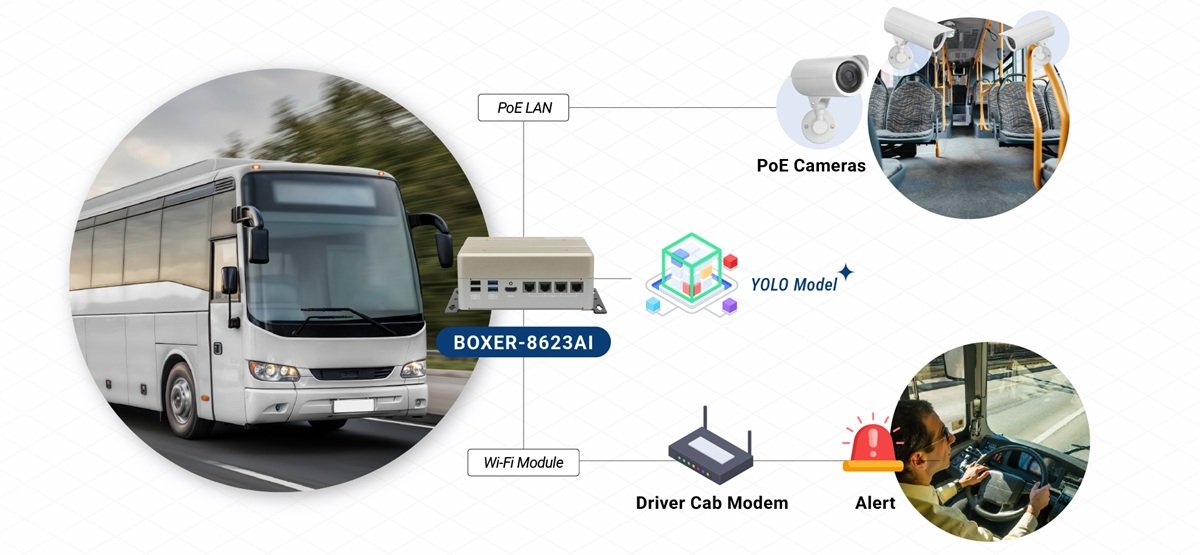
The application’s setup was rather straightforward, with four PoE cameras fitted throughout the top deck of each bus, connected to the BOXER-8623AI via the system’s PoE LAN ports. Video feeds from these cameras were analyzed using YOLO models run on the NVIDIA Ampere architecture GPU of the system’s NVIDIA Jetson Orin Nano module, detecting seat occupancy and identifying whether any passengers were standing. In the event that a safety issue was detected, the BOXER-8623AI triggered alerts notifying the driver, who could then take appropriate action. This information was transmitted from the BOXER-8623AI to a modem located in the driver’s cab via a Wi-Fi module installed on the system’s M.2 E-Key expansion slot.
AAEON’s Flexible Development Support
While product fit and performance were important, a key reason the customer chose to work with AAEON on this project was its reputation for flexibility and customization. Where hardware was concerned, AAEON performed a number of evaluations to establish compatibility between various drivers for the application’s cameras and other peripheral devices.
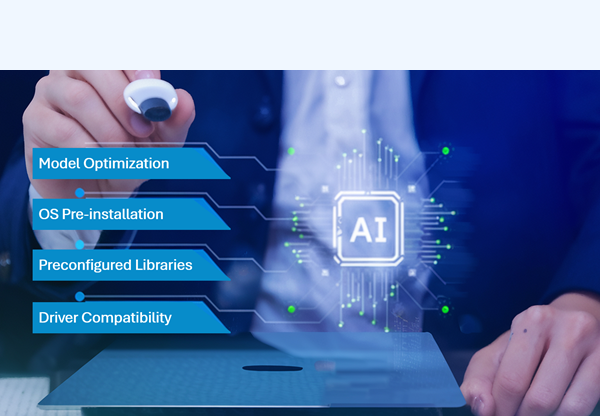
Meanwhile, AAEON’s software team provided a fully customized board support package (BSP), which included preloading the customer’s optimized YOLO inference model, preinstalling a deployment-ready OS with NVIDIA JetPack™, and tuning system power and performance profiles for stable multi-camera processing.
The AAEON software team’s deep understanding of the NVIDIA JetPack SDK also meant they were able to preconfigure system libraries, tune performance profiles for multi-camera inference, and verify that the preinstalled NVIDIA JetPack components were fully compatible with the customer’s model. With this additional support, AAEON helped expedite the project development timeline, progressing from prototype to pilot run within a matter of weeks.
Key Impact & Outcomes
- The primary impact the BOXER-8623AI had was the automated decision-making it provided, giving drivers real-time passenger safety information to ensure a 100% rate of compliance on the customer’s buses. As a result, the company estimated that incidents with the potential to affect passenger safety had been reduced by 30%.
- Equipped with four PoE LAN ports, the BOXER-8623AI made it possible for the customer to deploy multiple cameras throughout the upper deck of their buses. This saved a substantial amount of time and manpower during installation, given the application did not require separate camera power wiring.
- The high inference speed and multi-stream processing of the BOXER-8623AI’s NVIDIA Jetson Orin Nano module allowed the application to identify standing passengers and alert drivers in near real-time. By doing so, the time drivers took to verify that all passengers were safely seated prior to departing from each stop was reduced by an estimated 50%.
- AAEON’s ongoing support provides a streamlined channel for software updates. Meanwhile, the robust, modular design of the BOXER-8623AI serves to further future-proof the fleet, extending the system’s operational lifespan.