Overview
A company with a network of self-service laundromats primarily located in high-density population centers wanted to expand its operations to include locations outside of major cities.
Given the minimal on-site staffing required to operate their facilities, the company reasoned that by opening a large number of smaller facilities in often-neglected markets across a wider geographical area, they would not only reach a broader customer base, but differentiate and consolidate the company’s brand across regions.
To help them achieve this, they knew they would need a way to monitor and maintain each premises, and the equipment therein, from a central hub. To develop an application capable of this, they turned to AAEON.
Key Requirements for Scaling the Business
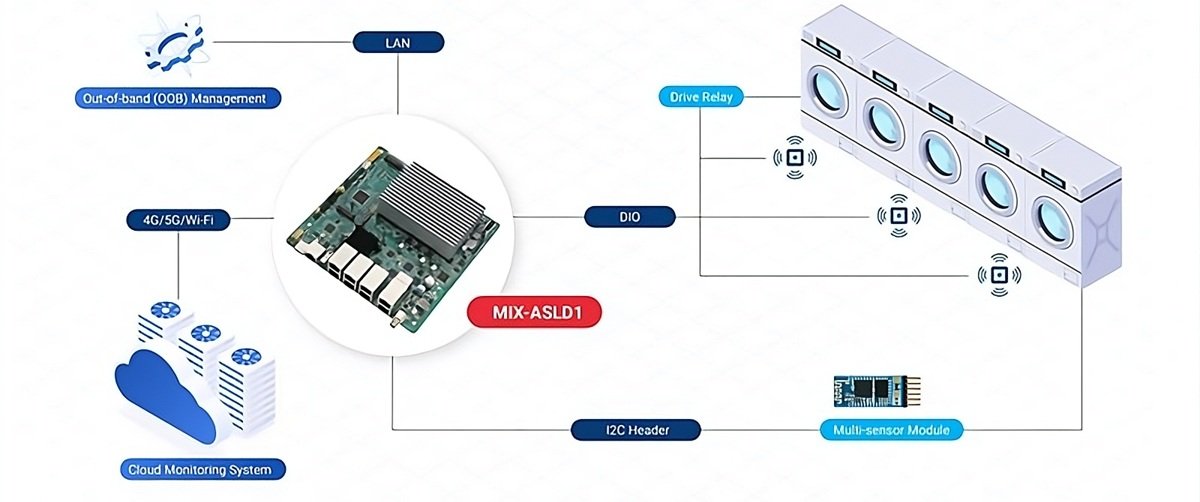
While the customer’s business model benefited from low staff overhead costs, they raised a number of potential logistical problems that could arise if all bases weren’t covered. For example, the customer explained that they wanted to be able to remotely monitor and log the status of each washing machine at each facility. Specifically, they wanted a way to check machine temperature, the presence of water leaks, and general machine health metrics.
Because their new facilities would be spread out across a larger area, the customer also wanted the IoT Gateway to be capable of issuing alerts and logs to a central control hub, transmitting data on machine usage, lifecycles, and common faults.
Most importantly, the customer wanted to eliminate the need for personnel to be physically on-site to actively maintain the machines, such as performing updates or troubleshooting technical issues. This was a vital prerequisite, as the logistics involved in sending personnel to remote facilities to fix common problems risked the expansion becoming a liability, with increased staff costs compounded by lost revenue during machine downtime. Because of this, the company requested that the application provide a way for operators to start or stop machines, reset systems, or respond to sensor alerts without being physically on-site.