


Bridging Legacy and Digital Transit Systems with Intelligent Edge Kiosks
Executive Summary
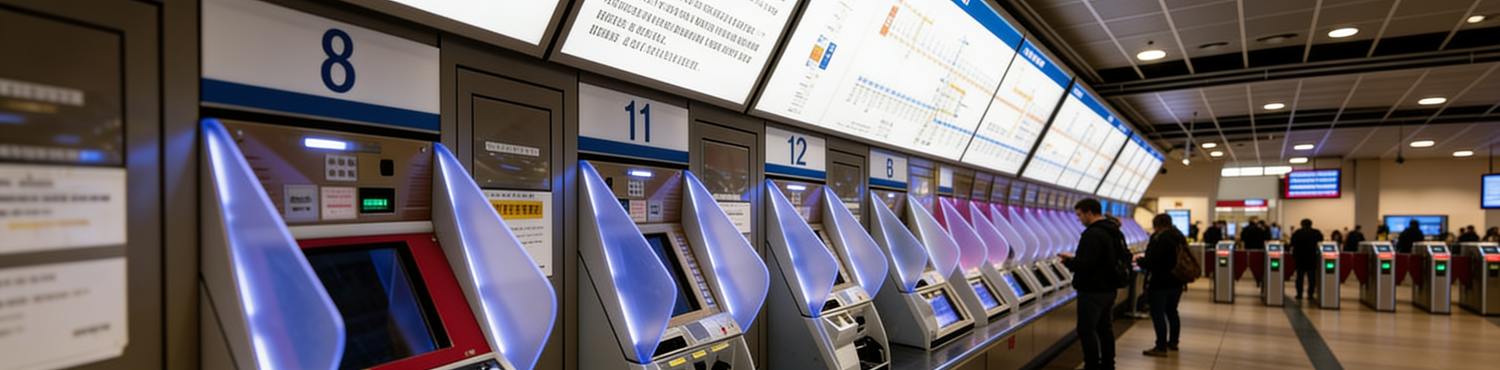
From Cairo to New York, Singapore and London, cities are transitioning from card-based to account-based public transport ticketing in an effort to make accessing and paying for journeys more efficient, flexible, and cost-effective. This approach moves fare management and transaction processing previously handled through physical cards into a centralized account-based system, allowing passengers to access transit services using modern credentials such as mobile wallets, smart watches, and contactless bank cards.
A major metropolitan public transit operator, which oversees over 7 million bus and metro journeys daily, planned to introduce this kind of account-based system in their city. However, with millions of existing dedicated transit cards in circulation and a need to maintain operational continuity, they required a way to phase in the adoption of their new system. To support this transition, they sought to develop an easy-to-use self-service kiosk that could operate as a secure passenger service interface through which legacy and modern payment methods could coexist, making the transition from card-based to account-based ticketing frictionless.
To do this, the operator implemented AAEON’s UP 710S as their self-service kiosk’s edge computing platform. By doing so, they received a compact and secure foundation capable of supporting both existing transit credentials and future digital payment services.
Balancing Long-Term Planning with Operational Continuity
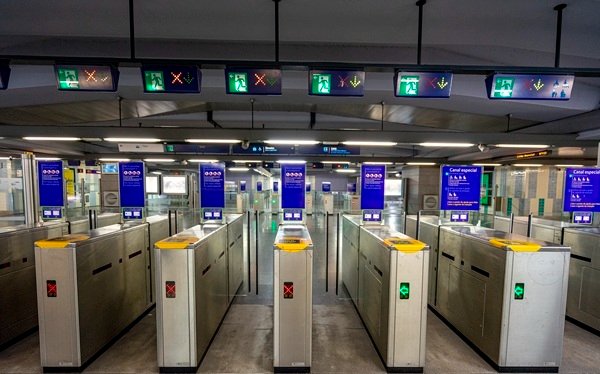
The transit operator’s long-term objective was to shift more complex fare management and payment processing functions away from distributed gate hardware and toward centralized backend systems that could process smartphone, digital wallet, and other contactless payment types.
While these changes would make public transportation ticketing easier and more efficient, it was important that they did not exclude users who may be unfamiliar with digital payment methods or the local transit system from using it. For example, a daily traveler that already used a digital wallet to buy coffee on their commute each morning would likely adapt to the account-based system with ease, whereas occasional users, tourists, and those with minimal digital experience may face difficulties.
To maintain service continuity and allow the systems to run in parallel throughout the transition phase, the operator planned to deploy self-service kiosks at high-traffic transit hubs. The purpose of these kiosks was to act as distributed digital service windows to interface between payment credentials and centralized backend platforms while offering an intuitive, user-friendly interface for the public.
Key Platform Requirements
- Multiple interfaces to support smart card readers, payment terminals, receipt printers, and QR code scanners.
- Both a compact form factor and fanless operation to allow for installation in the space-constrained kiosk enclosure, with minimal noise.
- Robust, secure networking capabilities for direct data exchange with transit system backend.
- Reliable security features for critical data encryption, device identity protection, and trusted software execution.
- Stable computing performance able to run a full operating system and kiosk application environment with minimal latency.
Designing a Flexible Passenger Service Gateway
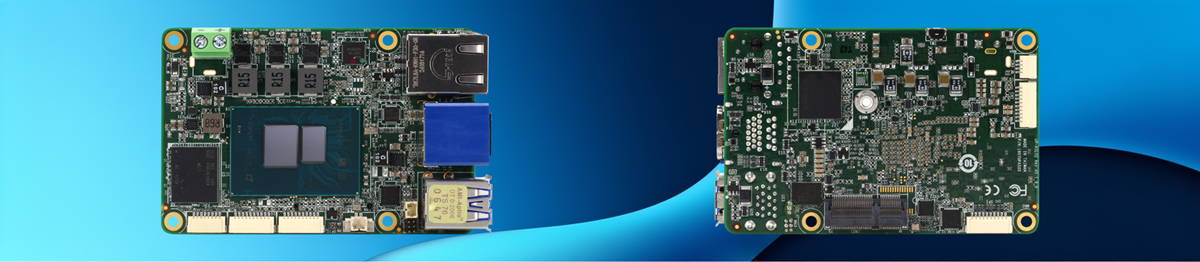
The transit operator chose AAEON’s UP 710S single-board for the project. Compared to traditional industrial systems or larger embedded single-boards, the UP 710S offered a unique combination of ultra-compact size, industrial reliability, and rich I/O expansion, making it a particularly attractive option.
Enabling Deployment in Space-Constrained Environments
The UP 710S was designed specifically for installations where every millimeter matters. Measuring just 85mm x 56mm, the UP 710S was ideal for use in a space-constrained kiosk enclosure. While similarly compact single-boards were available to the operator, the UP 710S had a distinct design advantage due to its minimal 25.13mm height.
Delivering 24/7 Operation Within High-Traffic Transit Hubs
Passively cooled via heatsink, the UP 710S addressed common concerns that come with fan-cooled embedded platforms, such as dust accumulation. Moreover, key components such as the board’s CPU, RAM, and system storage were all fully embedded or soldered, reducing potential environmental failure points, given the vibration typically present in transit environments.
Supporting Real-Time Passenger Interaction with Low-Power Edge Computing
Powered by the quad-core Intel Processor N97, the UP 710S could handle sustained application workloads with minimal latency. Further, the platform’s integrated Intel UHD Graphics supported smooth touchscreen UI rendering and hardware video decoding to the kiosk’s customer-facing display panel.
Integrating Both New and Existing Payment Infrastructures into One Platform
The UP 710S provided all of the necessary interfaces to support payment interoperability, including multiple physical USB ports for payment terminals and touchscreen controllers to enhance the usability of the kiosk’s display panel. Meanwhile, the terminal’s thermal receipt printer and transit card reader could be installed through the UP 710S’s 10-pin wafer, which offered dual USB 2.0 interfaces.
Bridging the Gap Between Distributed Kiosks and Centralized Backend Systems
Equipped with an RJ-45 port for Gigabit Ethernet connectivity, the board could provide direct, secure communication with transit backend systems. This not only enabled central status monitoring of kiosk fleets, but also gave the system a reliable communication pathway for encrypted data exchange between kiosks and backend infrastructure.
While its direct connection to the station’s managed VLAN environment helped provide a controlled network pathway for kiosk communications, the board’s integrated TPM 2.0 reinforced on-system protection, providing hardware-backed security for device identity, encryption key storage, and trusted boot execution.
Application Architecture
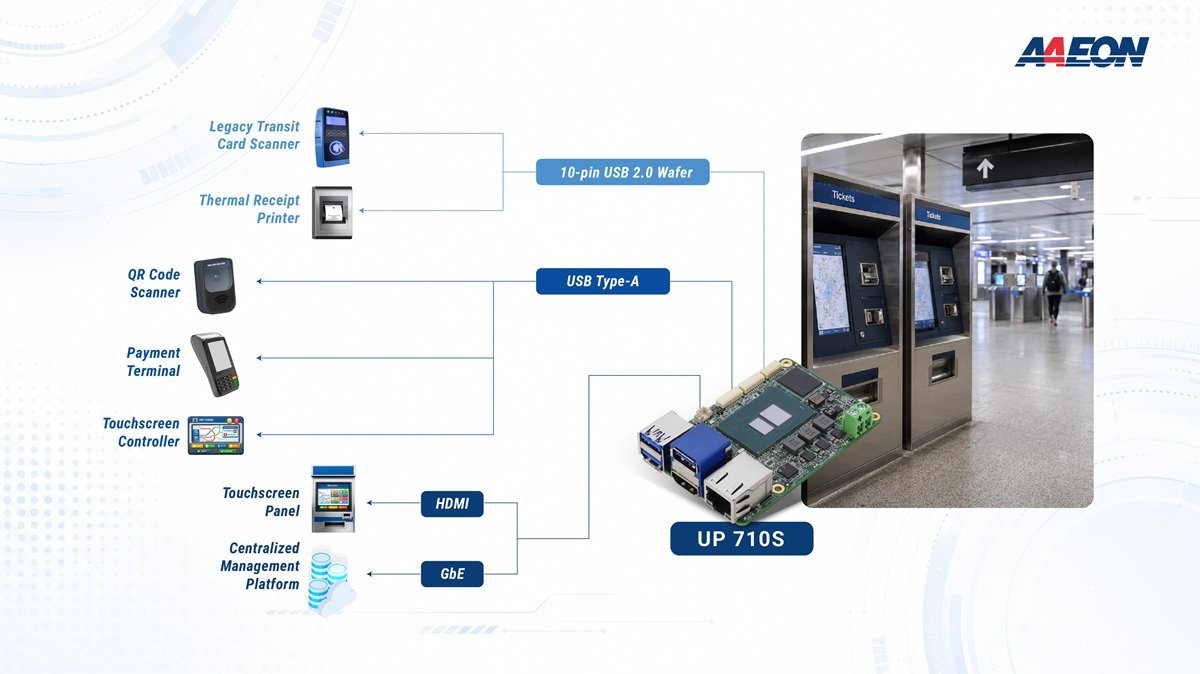
The UP 710S, as the kiosk’s edge controller, acted as a bridge between the transit operator’s account-based ticketing system on the backend and the passengers using it.
When using the kiosk, passengers interact with a touchscreen panel, the display for which is fed through the UP 710S’s HDMI interface. Meanwhile, a touchscreen controller connected to one of the board’s three USB Type-A ports facilitates touchscreen functionality for interactivity.
The board’s remaining USB Type-A ports support both a payment terminal and QR code scanner to allow users to purchase tickets, manage their accounts, or view journey and fare information. To maintain compatibility with existing transit infrastructure and support passengers who continue to use physical credentials, legacy transit cards can be read and topped up through an embedded card reader connected via the UP 710S’s 10-pin wafer connector, which provides USB 2.0 connectivity.
The platform runs the kiosk application workflow before exchanging data with the backend management system through the board’s Gigabit Ethernet connection. When the passenger has finished, the terminal provides the option of a physical receipt delivered by a thermal printer sharing the same 10-pin USB 2.0 wafer interface as the kiosk’s transit card reader.
Throughout this process, the UP 710S leverages a number of its TPM 2.0’s hardware-based security features to help protect kiosk identity, encryption keys, and system integrity, ensuring secure communication between distributed terminals and centralized transit infrastructure.
Implementation & Impact
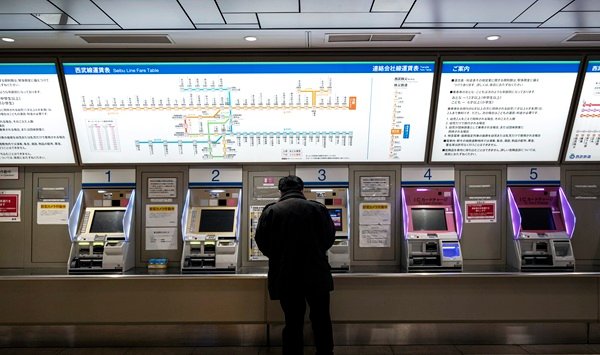
Following the gradual phasing in of account-based ticketing in the city, the transit operator saw substantial adoption of new payment methods, with account-based ticketing now making up approximately two-thirds of adult commuters’ public transport usage.
This illustrates that, much like in the retail and hospitality sectors, users appreciate the flexibility and choice offered by alternative payment methods. Importantly though, it also shows that there is a significant population that remain reliant on legacy card-based ticketing. It is for this section of the public that the smart kiosk application serves to deliver an inclusive and accessible public transport experience.
Using the UP 710S, the transit operator successfully deployed self-service kiosks across more than 15 key transit hubs throughout the city, including both rail and bus stations. As a consequence, the city continues to provide service to legacy transit card users, and will do so throughout the transition to account-based ticketing, maintaining operational continuity in a city where public transit serves millions of passengers daily.
 苏公网安备 32059002002996号