


- Resources
- Tech Insights
- Arm Processor Computer Guide
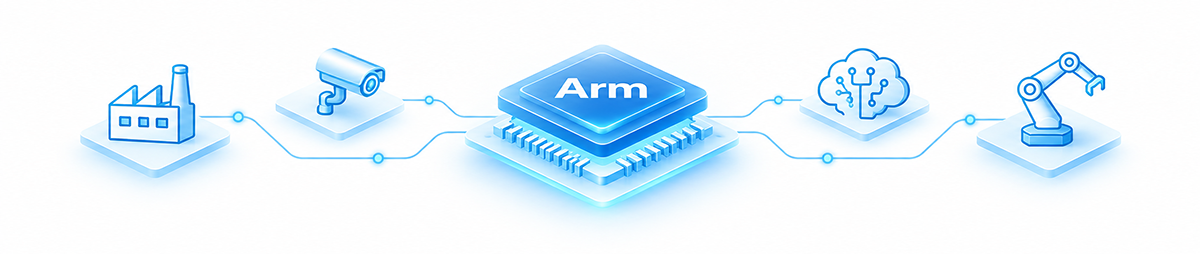
Arm processors are now widely used in everything from mobile devices to industrial and edge computing systems. In this guide, we will explain how an Arm processor computer works, how it compares with x86-based systems, and why Arm is a good fit for many modern computing applications.
What is an Arm Processor? How Does It Work?
An Arm processor is a type of Central Processing Unit (CPU) built on a Reduced Instruction Set Computer, or RISC, architecture. The Arm processor architecture is designed to handle instructions efficiently, helping reduce power use and heat while still delivering strong performance for many types of computing tasks.
An Arm processor works by breaking complex tasks into a series of simpler instructions. These instructions are designed to be processed quickly and efficiently, which can reduce the amount of power the processor needs to complete a task.
Modern Arm processors also use techniques such as pipelining, branch prediction, and parallel instruction execution to improve performance. These features allow the processor to work on multiple operations more efficiently instead of handling every instruction one at a time.
Another important feature of Arm is its licensing model. Rather than manufacturing every physical processor itself, Arm develops processor architectures and CPU designs that chip manufacturers can license and integrate into their own products. This approach has allowed Arm technology to be adapted for a wide range of applications, from small embedded systems to high-performance computers.
What Does Arm Stand For?
The name Arm dates back to the 1980s, when the architecture was first developed for personal computers. ARM originally stood for Acorn RISC Machine. When the processor business later became a separate company, the name was associated with Advanced RISC Machines. Today, Arm is used simply as the name of the company and processor architecture rather than as an acronym.
Arm CPU vs. Arm SoC vs. Arm Computer
Although the terms are closely related, an Arm CPU, Arm SoC, and Arm computer refer to different levels of a computing system.
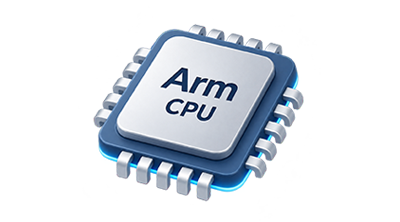
Arm CPU:
The CPU is the main processing core that reads and executes instructions. Different Arm CPU families are designed for different workloads, ranging from low-power embedded control to application processing and infrastructure computing.
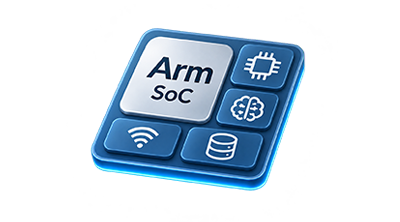
Arm SoC:
A System-on-a-Chip, or SoC, combines the CPU with other components on a single chip. Depending on the design, this may include graphics processing, AI acceleration, memory controllers, security functions, and connectivity interfaces. This high level of integration can help reduce system size and power consumption.
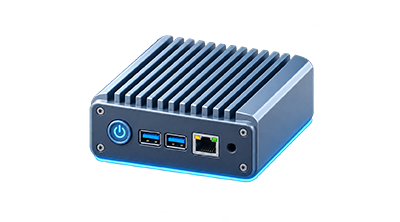
Arm Computer:
An Arm computer is the complete system built around an Arm-based processor or SoC. It includes memory, storage, I/O interfaces, power components, and an operating system. Arm computers can take many forms, including embedded computers, industrial systems, mobile devices, workstations, and servers.
Arm-based Processor vs x86 Processor
Arm and x86 are two major processor architectures, but they take different approaches to how a CPU handles instructions. These differences can affect power consumption, heat generation, system size, software compatibility, and performance.
RISC vs. CISC Architecture
The most basic difference between Arm and x86 is their instruction set design.
Arm is based on RISC (Reduced Instruction Set Computer) architecture. It uses a streamlined instruction set, with complex tasks typically divided into a series of simpler operations. This approach can make instruction processing more efficient and has helped Arm become well suited to systems where power use and space are important.
x86, on the other hand, is based on CISC (Complex Instruction Set Computer) architecture. Its instruction set includes more complex instructions that can perform several operations. Modern x86 processors are highly optimized, so the practical difference between RISC and CISC is more complicated than simply saying one uses simple instructions and the other uses complex ones.
Power Consumption and Energy Efficiency
Power efficiency has traditionally been one of Arm's main strengths. Arm-based processors are widely designed for applications where achieving more computing performance with less power is important.
Lower power consumption can also reduce the amount of heat a system generates. This is particularly useful for compact embedded computers, battery-powered devices, and systems that need to operate continuously.
x86 processors can also be designed for efficient operation, but the architecture has traditionally been common in systems where higher power budgets are acceptable in exchange for strong general-purpose computing performance. Actual power consumption, however, depends on the processor, workload, and complete system design rather than the instruction set alone.
Thermal Design and System Size
Because many Arm processors are designed around lower power requirements, they can make it easier to build compact systems with simpler cooling solutions. Some Arm-based computers can even operate with passive cooling instead of a fan, depending on their processor and workload.
Arm processors are also frequently integrated into System-on-a-Chip (SoC) designs. As explained earlier, an SoC can combine CPU cores with graphics, memory controllers, connectivity, AI acceleration, and other functions on one chip. This integration can reduce the space and number of components required inside a computer.
x86 systems are available in everything from compact computers to powerful workstations and servers. They often provide greater flexibility for high-performance components and expansion, although this may also require more space, power, and cooling in higher-performance configurations.
Software Compatibility and Operating Systems
There is no single Arm operating system. Instead, many desktop, mobile, embedded, and Linux-based operating systems are available in versions designed to run on Arm processors. Software that has been developed specifically for Arm can run natively and take full advantage of the architecture.
Some operating systems can also run software originally developed for x86 through emulation. However, emulation may introduce additional processing overhead, and certain components, such as hardware drivers, may still require a version built specifically for Arm.
x86 has been widely used in PCs and enterprise computing for decades, giving it a particularly large library of existing software and strong support for older applications and hardware. Therefore, businesses moving an existing x86 application to Arm should check software, driver, and peripheral compatibility before changing platforms.
Performance
It is no longer accurate to think of Arm as simply a low-performance architecture for small devices. Modern Arm processors can support demanding workloads ranging from general computing to edge AI and infrastructure applications.
At the same time, x86 remains widely used for performance-intensive PCs, workstations, and servers. Instead of assuming that one architecture is always faster, performance should be compared based on the actual application. CPU design, core count, clock speed, memory, accelerators, software optimization, cooling, and power limits can all affect the final result.
Arm vs. x86 Comparison
| Factor | Arm-Based Processors | x86 Processors |
| Instruction Set | RISC | CISC |
| Instruction Approach | Streamlined instructions with a strong load/store design | More complex, variable-length instructions |
| Power Efficiency | Commonly optimized for high performance per watt | Varies widely, with many platforms designed for higher power budgets |
| Thermal Design | Lower-power platforms can support compact or fanless designs | Higher-performance systems may require more substantial cooling |
| System Integration | Commonly used in highly integrated SoCs | Available in both highly integrated and expandable system designs |
| Form Factor | Well suited to compact embedded and edge systems | Ranges from compact PCs to large workstations and servers |
| Software Compatibility | Strong and growing ecosystem; some existing x86 software may require native versions or emulation | Very broad compatibility with established and legacy PC software |
| Operating System Support | Supports major embedded, mobile, desktop, and Linux-based operating systems | Broad support for desktop, server, and Linux-based operating systems |
| Typical Strength | Power efficiency, integration, compact design, and specialized computing | Broad software compatibility, expansion, and general-purpose performance |
To sum up, neither Arm nor x86 is better for every situation. Arm is particularly attractive when power efficiency, compact size, integration, and thermal control are priorities, while x86 may be preferable when existing software compatibility, expansion, or specific high-performance workloads are more important.
Examples of Arm Processors
Arm offers several processor families designed for different types of computing. Some are built for full computers that run operating systems and applications, while others are designed for embedded control and real-time tasks.
Cortex-A Series:
Designed for application processing and capable of running full operating systems such as Linux, Android, and Windows-based environments. Cortex-A processors are commonly used in mobile devices, embedded computers, smart displays, and other systems that need a balance of performance and power efficiency.
Cortex-M Series:
Designed for microcontrollers that perform specific tasks with very low power consumption. They are widely used in sensors, IoT devices, control systems, wearables, and other embedded applications where compact size and energy efficiency are important.
Cortex-R Series:
Built for real-time applications where the processor must respond within a predictable amount of time. Cortex-R processors are commonly used in automotive systems, storage devices, industrial controls, and other applications that require reliable and time-sensitive operation.
Neoverse Series:
Designed for infrastructure computing, including cloud, networking, edge infrastructure, and data center workloads. Neoverse focuses on scalable performance and power efficiency for systems that may need to handle many computing tasks at the same time.
General-Purpose Computing vs. Embedded Control
Not every Arm processor is designed to power a complete computer. Cortex-A and Neoverse processors are generally aimed at more complex computing environments that require advanced operating systems, larger memory capacities, and demanding applications.
By comparison, Cortex-M and Cortex-R processors are more commonly used as embedded controllers. Instead of running desktop applications, they usually perform dedicated tasks inside a larger device. A Cortex-M processor, for example, might collect sensor data or control a small connected device, while a Cortex-R processor may handle a real-time control task where predictable response times are essential.
Benefits of Arm Computers
Arm-based computers are used across many types of devices because they can combine efficient processing with compact system design. The main benefits include:
High Power Efficiency:
Arm processors are designed to deliver strong performance while using relatively little power. This makes them well suited to systems that need to operate continuously, run on batteries, or keep energy consumption under control.
Compact and Fanless Design Potential:
Lower power use usually means less heat. As a result, many Arm computers can be built in smaller enclosures and may use passive cooling instead of fans, depending on the processor and workload.
Wide Scalability:
Arm architecture can support everything from small embedded controllers to industrial computers, edge systems, workstations, and infrastructure computing. This gives developers a wide range of processor options for different performance and power requirements.

Cost-Effective System Design:
The high level of integration found in many Arm-based SoCs can reduce the number of separate components required in a system. Lower power and cooling requirements may also help reduce long-term operating costs.
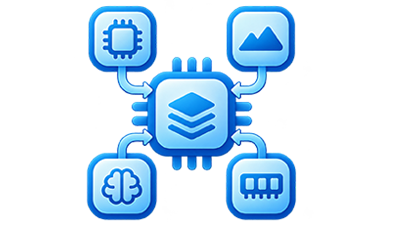
Strong Hardware Integration:
Arm-based SoCs can combine CPU cores with graphics, AI accelerators, memory controllers, security features, and communication interfaces on a single chip. This can simplify system design while supporting more functions in a compact platform.
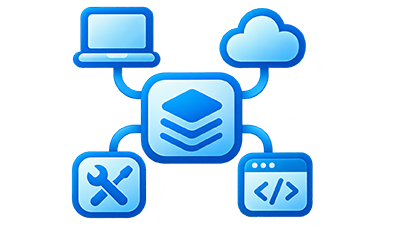
Broad and Growing Ecosystem:
Arm is widely supported across embedded systems, mobile devices, edge computing, and infrastructure platforms. Its large hardware and software ecosystem gives developers more flexibility when selecting processors, operating systems, development tools, and system configurations.
Common Applications of Arm Processor Computers
Arm processors are already well known for powering smartphones and other mobile devices, but their use now extends far beyond consumer electronics. Today, Arm-based systems can also be found in industrial computers, edge devices, AI platforms, and even professional Arm workstations. The combination of power efficiency, compact integration, and scalable performance makes them suitable for a wide range of modern computing environments.
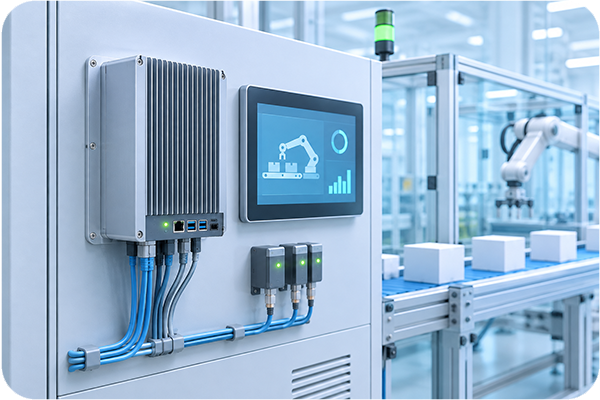
Factory Automation and HMI
Factory systems need reliable computers to monitor equipment, collect sensor data, operate HMIs, and communicate with machines or industrial networks. These systems often run continuously and may be installed in cabinets or other spaces where airflow is limited.
An industrial Arm computer can support these workloads with relatively low power consumption and heat output, making compact or fanless system designs easier to implement. Arm-based platforms can therefore be used for machine monitoring, operator interfaces, production data collection, and other automation tasks where continuous operation is important.
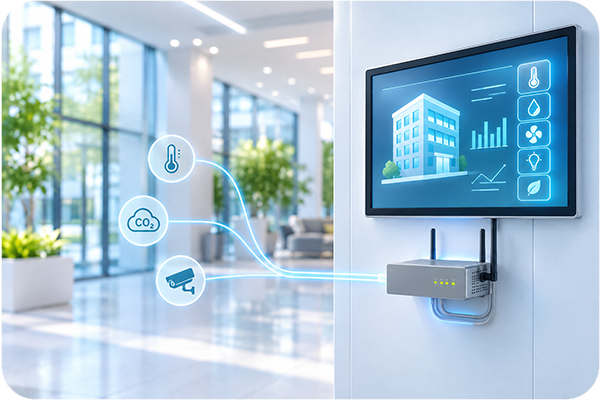
IoT Gateways and Edge Computing
IoT gateways sit between sensors, devices, and central systems. They can collect data from multiple sources, convert communication protocols, filter unnecessary information, and process data locally before sending it to the cloud.
An Arm based embedded computer is well suited to this role because it can provide local computing and connectivity without requiring a large power budget. This is useful for smart factories, utilities, building management, environmental monitoring, and other distributed IoT systems.
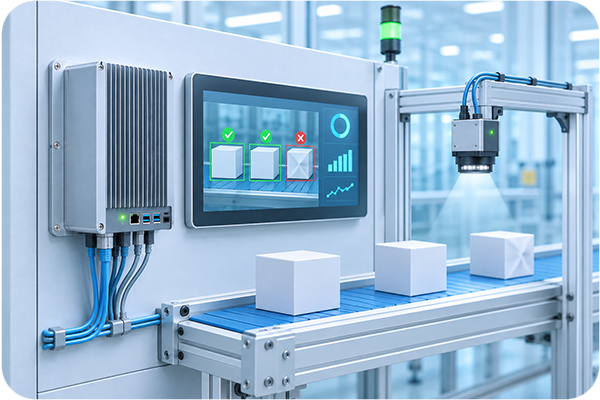
Edge AI and Machine Vision
Edge AI allows devices to analyze data locally instead of sending every image, video, or sensor reading to a remote server. Common applications include visual inspection, object detection, defect recognition, smart cameras, and video analytics.
Many Arm-based SoCs can combine CPU cores with GPU or NPU acceleration, allowing AI inference to run directly on the device. This can reduce latency and network traffic while enabling local decision-making when cloud connectivity is limited or unavailable.

Robotics and Autonomous Machines
Robots need to handle many types of data at the same time, including cameras, distance sensors, navigation information, motor controls, and network communication. Mobile robots also need to manage these workloads without using too much battery power.
Arm-based systems can combine general-purpose processing with AI acceleration and real-time control functions in a compact platform. This makes them suitable for autonomous mobile robots, service robots, robotic vision systems, and other machines that need to sense their surroundings, make decisions, and respond in real-time.
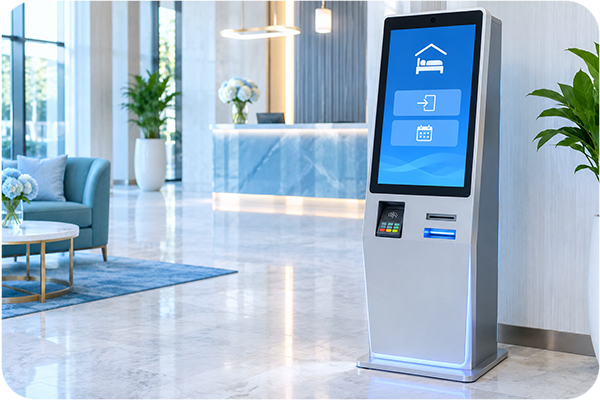
Digital Signage and Self-Service Kiosks
Digital signage and self-service systems need more than basic computing. They may need to play high-resolution video, drive multiple displays, respond to touch input, communicate with peripherals, and connect to remote management platforms.
The high level of integration found in many Arm SoCs makes it possible to handle graphics, multimedia, connectivity, and general computing within a compact system. This makes Arm-based platforms a practical option for digital signage, information terminals, ordering kiosks, ticketing systems, and other embedded installations where space and power consumption are important considerations.
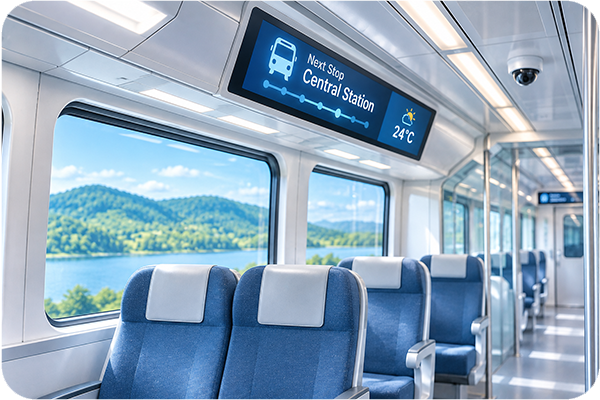
Transportation and Rugged Edge Computing
Transportation systems often need computers for fleet management, passenger information, video surveillance, vehicle monitoring, and local data processing. These computers may also need to operate in environments exposed to vibration, temperature changes, dust, or limited ventilation.
An industrial Arm-based computer can help support compact and low-power system designs for these applications. With appropriately ruggedized hardware, Arm-based computers can be deployed in vehicles, roadside equipment, railway systems, and other transportation applications that require continuous edge processing close to where the data is generated.
FAQs
Are Arm processors suitable for edge AI? |
Yes. Many Arm-based processors can combine CPU cores with GPUs, NPUs, or other AI accelerators, making them suitable for running AI inference directly at the edge. They are commonly used for applications such as machine vision, object detection, video analytics, and robotics where low power consumption and fast local processing are important. |
Are Arm processors compatible with Windows? |
Yes. Windows is available for Arm-based computers, but software compatibility can vary. Applications designed natively for Arm generally provide the best performance, while some x86 and x64 applications can run through emulation. Drivers and specialized software should still be checked before moving an existing system to Arm. |
Are Arm processors only used in mobile devices? |
No. Although Arm processors are strongly associated with smartphones and tablets, they are now used across many other computing environments. These include industrial computers, IoT gateways, edge AI systems, robotics, digital signage, workstations, and infrastructure computing. |
Can x86 software run on an Arm processor? |
In some cases, yes. Certain operating systems can use emulation or compatibility layers to run software originally developed for x86 processors. However, performance and compatibility may vary, and some applications, drivers, or specialized industrial software may require an Arm-native version. |
Is Arm better than x86 for industrial computers? |
Not always. Arm can be a strong choice when power efficiency, compact size, low heat output, and integrated processing are priorities. x86 may be more suitable when an application depends heavily on existing software, high expansion requirements, or specific performance needs. The best choice depends on the workload and deployment environment. |
Meet AAEON’s Arm-Based Computing Solution
At AAEON, we provide a wide range of Arm-based computing solutions for industrial, embedded, and edge applications. Our portfolio includes compact RISC single-board computers, IoT Gateways, and SMARC computer-on-modules, giving customers flexible options for different performance, size, and integration requirements. Selected products also support industrial features such as extended operating temperatures, rich I/O, fanless designs, and reliable operation in demanding environments.
Whether you are building an IoT gateway, automation system, edge device, or other embedded application, we can help you find an Arm platform that fits your project. Explore AAEON’s Arm-based computing solutions or contact AAEON to discuss your requirements.


close
We’re just a message away! Let us help with your needs.
Get a Quote