


- Resources
- Tech Insights
- IoT Gateway: A Complete Guide
What is an IoT Gateway
An IoT gateway is a hardware device, software platform, or combination of both that connects local sensors, machines, and smart devices to cloud-based applications. It acts as an intermediary between devices that use local communication protocols and cloud platforms that rely on standard internet protocols.
IoT devices may communicate through various technologies such as Bluetooth, Modbus, or proprietary industrial protocols. Because of this, an IoT gateway is often described as a universal translator or intelligent central hub. It allows devices from different manufacturers and technology ecosystems to exchange information through a common infrastructure.
How Does an IoT Gateway Work?
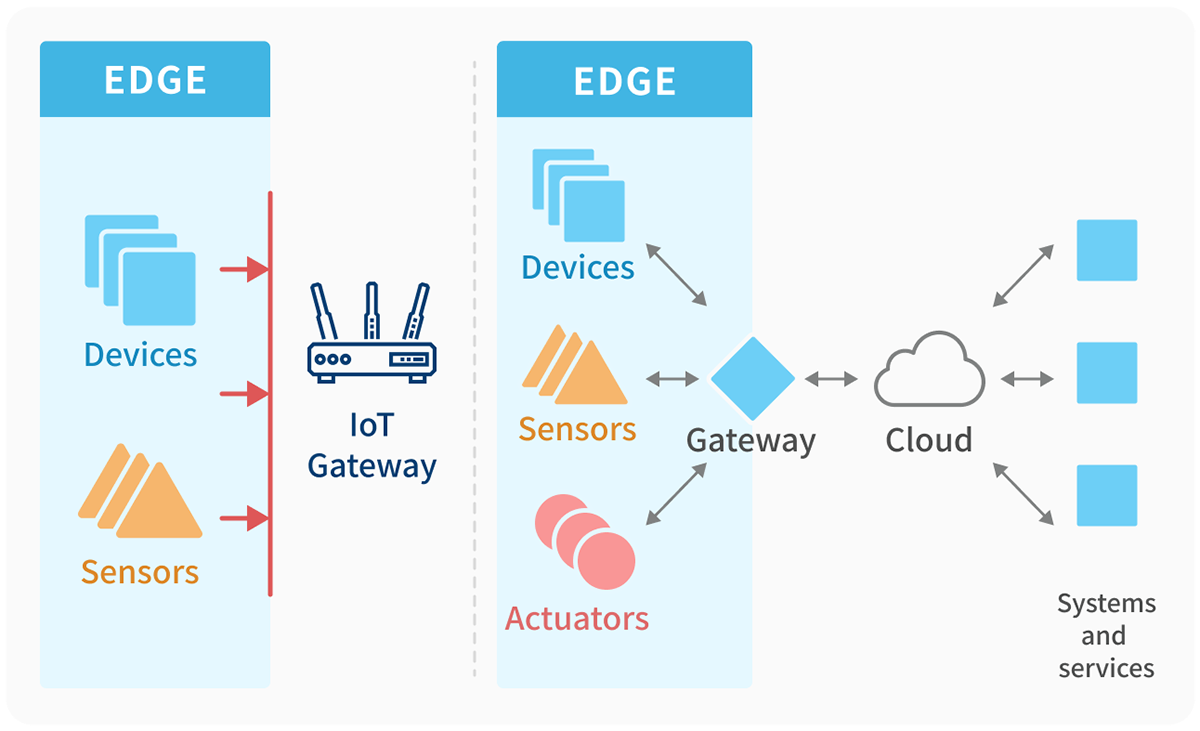
Within an IoT gateway architecture, the gateway typically sits between the device layer and the cloud or application layer. Sensors and machines collect information at the edge, while the gateway manages communication, processing, security, and data transfer before the information reaches cloud-based analytics systems. The process can be broken down into four main steps:
Receive Data from Devices
The gateway collects data from sensors, machines, and controllers through wired or wireless connections.

Preprocess Data Locally
IoT gateway software filters unnecessary information, removes duplicate readings, aggregates data, converts measurement units, and detects abnormal conditions. Local processing reduces bandwidth use and enables faster responses.

Translate Communication Protocols
The gateway converts device-specific or industrial protocols into standardized internet protocols. This allows legacy equipment and modern sensors to communicate with cloud applications.

Send Data to the Cloud
Processed data is transmitted to a cloud platform, database, or remote monitoring system through Ethernet, Wi-Fi, cellular, or satellite connections.
IoT gateways also support two-way communication. Cloud platforms can send commands back through the gateway to update firmware, change device settings, control equipment, or trigger emergency shutdowns. If the internet connection is interrupted, the gateway can store data locally and upload it after connectivity is restored.
Gateways in an IoT System
Types of IoT Gateways
Industrial IoT Gateways
Industrial IoT gateways are designed for factories, energy facilities, transportation systems, warehouses, and other demanding environments. They connect industrial machines, programmable logic controllers, sensors, and legacy equipment to modern monitoring and cloud platforms.
These gateways often support industrial protocols such as Modbus, PROFINET, EtherCAT, CAN bus, and OPC UA. They may also include rugged enclosures, wide operating temperature ranges, vibration resistance, and protection against dust or electrical interference.
Industrial gateways are frequently used to retrofit older machines that were not originally designed for internet connectivity. By adding a gateway, companies can collect machine data, monitor production, and implement predictive maintenance without replacing the entire system.
LoRaWAN Gateways
LoRaWAN gateways connect low-power sensors to a LoRaWAN network server. They are commonly used in applications that require long-range communication with low energy consumption.
Examples include smart agriculture, environmental monitoring, utility metering, parking systems, and Smart City infrastructure. Sensors transmit small amounts of data over long distances to the gateway, which then forwards the data to a network server through Ethernet, Wi-Fi, or cellular networks.
LoRaWAN gateways are especially useful in remote or widely distributed deployments where conventional Wi-Fi coverage is impractical.
Cellular IoT Gateways
Cellular IoT gateways use mobile networks such as 4G, 5G, LTE-M, or NB-IoT to connect devices to the internet. They are suitable for mobile equipment, remote sites, vehicles, kiosks, and locations without fixed broadband infrastructure.
These gateways may be used in fleet management, public transportation, vending machines, renewable energy installations, and remote monitoring systems. Some models support dual SIM cards or combine cellular connectivity with Wi-Fi and Ethernet to provide network redundancy.
When one connection becomes unavailable, the gateway can switch to another network, helping maintain continuous communication.
Edge Computing Gateways
Edge computing gateways perform more advanced data processing close to the devices that generate the data. Instead of sending all raw data to the cloud, they can run local analytics, artificial intelligence models, or automated control applications.
These gateways are used in machine vision, predictive maintenance, robotics, healthcare monitoring, and other applications that require rapid responses. For example, an edge gateway connected to industrial cameras may analyze images locally and identify product defects without uploading every image to the cloud.
By processing data at the edge, organizations can reduce latency, lower bandwidth consumption, improve privacy, and continue operating even when cloud connectivity is interrupted.
Types of IoT Gateways
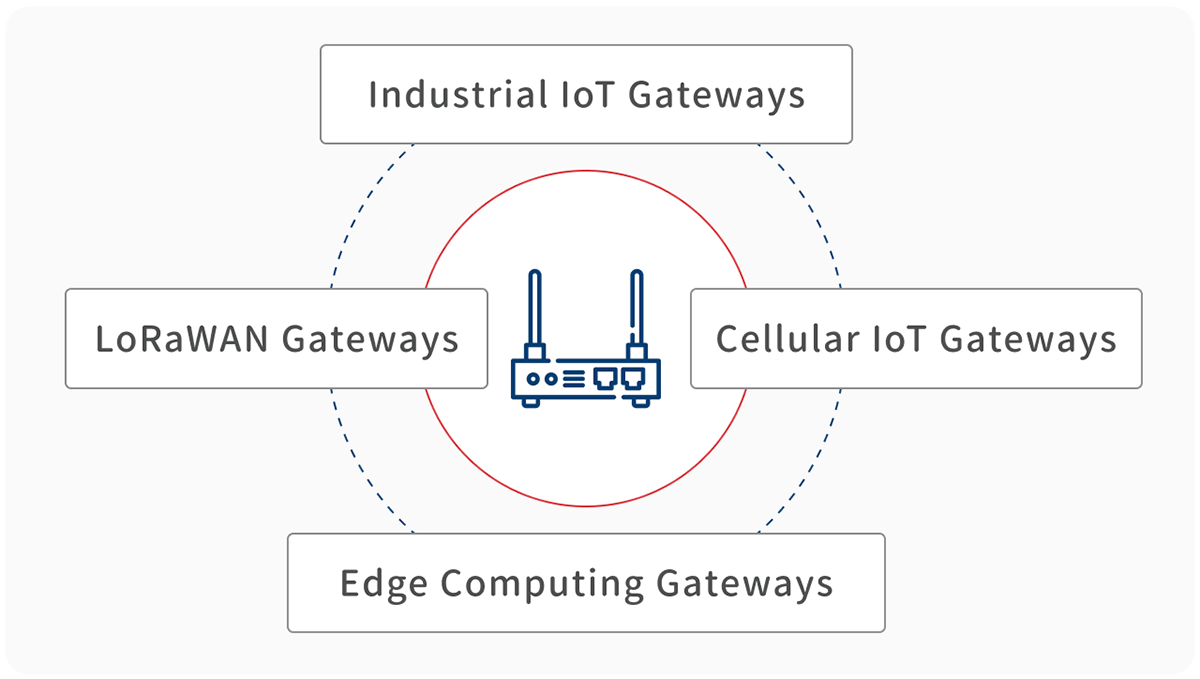
The distinction between gateway types is not always strict. A rugged industrial gateway may also include cellular connectivity, LoRaWAN support, and edge computing capabilities. The appropriate solution therefore depends on the required protocols, processing power, environmental protection, security features, and long-term deployment needs.
4 Key Functions of an IoT Gateway
Protocol Translation
IoT sensors, machines, and controllers may communicate through protocols such as Zigbee, Bluetooth Low Energy, Z-Wave, BACnet, or Modbus. Cloud platforms usually cannot interpret these device-level protocols directly.
The gateway converts incoming data into standardized internet protocols such as MQTT, HTTP, or HTTPS, and may encode the data in formats such as JSON. This translation allows devices from different manufacturers and technology environments to communicate with the same cloud platform.

Data Filtering
Connected devices can generate large amounts of raw data, much of which may be repetitive or unnecessary. Sending every reading to the cloud increases bandwidth consumption, storage requirements, and processing costs. IoT gateway software can reduce the volume of data transmitted by:
- Aggregating multiple sensor readings
- Calculating averages or summaries
- Removing duplicate information
- Forwarding only meaningful changes or alerts
- Discarding incomplete or irrelevant data
This ensures that cloud systems receive useful, high-quality information instead of an uninterrupted stream of raw readings.

Local Processing
Local processing allows the gateway to respond to predefined conditions without waiting for instructions from a remote server. For example, a gateway may stop a machine when excessive vibration is detected or activate an alarm when a temperature limit is exceeded.
This also reduces latency and keeps essential operations running even when internet connectivity is interrupted. The gateway can also cache data during an outage and upload it after the connection is restored.

Edge Intelligence
Edge intelligence extends local processing by enabling the gateway to analyze and interpret data more independently. An edge-enabled gateway may run advanced analytics or machine learning models to identify patterns, detect anomalies, classify images, or predict equipment failures.
Based on these results, the gateway can determine which events require immediate local action and which information should be sent to the cloud for long-term storage or further analysis. This improves response speed while reducing dependence on continuous cloud connectivity.
Benefits of IoT Gateways

Reduced Bandwidth Usage
IoT gateways reduce bandwidth consumption by filtering, aggregating, and summarizing data before sending it to the cloud. Instead of transmitting every sensor reading, the gateway may calculate averages, remove duplicate information, or report only meaningful changes. This is especially important in large-scale deployments where thousands of connected devices could otherwise overwhelm network capacity and create unnecessary traffic.

Lower Operating Costs
Reducing the amount of transmitted data helps lower cellular, network, cloud storage, and cloud processing costs. A gateway can also connect and manage many sensors through one centralized system, reducing the need for each device to maintain its own direct internet connection. This makes IoT deployments more cost-effective, especially in remote, industrial, and large-scale environments with many connected devices.

Offline Continuity
IoT gateways allow essential operations to continue when cloud connectivity is unavailable. During an outage, the gateway can process data locally, control connected equipment, and respond to predefined conditions. It can also store sensor readings in a local cache or buffer. Once the connection is restored, the saved information is automatically uploaded, reducing the risk of operational disruption or data loss.

Enhanced Security
An IoT gateway provides a protective layer between local devices and the public internet. It can prevent sensors from being directly exposed while centrally managing authentication, encryption, access control, firewall rules, and intrusion detection. This is valuable because many low-power sensors cannot support advanced security functions independently. Centralized security management also simplifies threat monitoring and helps reduce the number of potential entry points for attacks.

Improved Energy Efficiency
Sensors can conserve energy by communicating with a nearby gateway through short-range, low-power technologies rather than connecting directly to a distant cloud server. The gateway handles the more energy-intensive task of transmitting data over Wi-Fi, Ethernet, cellular, or satellite networks. This arrangement can extend battery life and reduce maintenance requirements in applications such as agriculture, environmental monitoring, smart buildings, and remote asset tracking.

Centralized Remote Management
IoT gateways provide a central point for managing connected devices across a site or an entire fleet. Operators can remotely monitor device status, change configurations, restart equipment, distribute firmware updates, and troubleshoot communication problems. Because commands can travel from the cloud through the gateway to individual devices, organizations can maintain large deployments more efficiently without physically accessing every sensor, machine, or remote installation.
Examples of IoT Gateway Uses Across Industries
IoT gateways can be deployed across many industries to connect sensors, vehicles, machines, and specialized equipment with cloud platforms. Let’s take a look at the actual applications of these gateways in different fields:
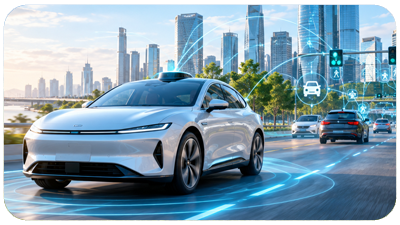
Automotive and Transportation
IoT gateways support fleet management, vehicle telematics, and micromobility services. In e-bike and e-scooter fleets, they can transmit battery status, motor conditions, location, and fault information to a central platform. Operators can also send commands to vehicles remotely to lock them, apply location-based speed limits, diagnose faults, and help recover stolen assets.
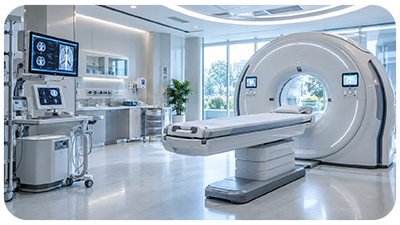
Healthcare
In healthcare environments, IoT gateways collect data from connected medical devices and transmit it securely to monitoring systems or cloud platforms. They can support continuous patient monitoring by consolidating information such as heart rate, blood pressure, oxygen saturation, or device status. Local processing may also help identify abnormal readings quickly while reducing the amount of raw data sent to remote systems.
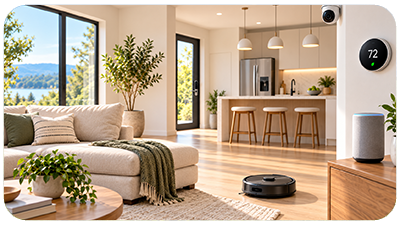
Smart Homes
A smart home gateway connects devices such as thermostats, lighting systems, security cameras, locks, and motion sensors through one central platform. It translates between different communication protocols so products from different manufacturers can work together. For example, a motion sensor may trigger the lights, adjust the temperature, or activate a security camera without requiring direct compatibility between each device.
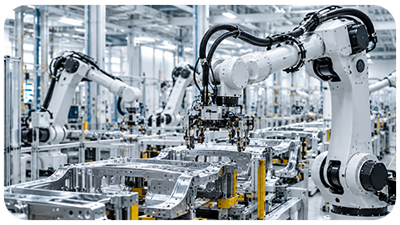
Industrial Automation
Industrial IoT gateways connect sensors, machines, controllers, and legacy equipment to modern monitoring and control systems. They enable real-time process supervision, predictive maintenance, and automated safety responses. If a motor shows abnormal vibration, for example, the gateway can trigger an emergency shutdown locally. Gateways also help retrofit older machinery by translating industrial protocols into cloud-compatible formats.

Agriculture
In precision agriculture, IoT gateways collect information from soil moisture sensors, weather stations, irrigation systems, and livestock-monitoring devices. The data can be processed locally and sent to farm management platforms for analysis. Farmers can use these insights to optimize irrigation schedules, reduce water and fertilizer use, monitor field conditions, and respond more quickly to changes in weather or crop health.
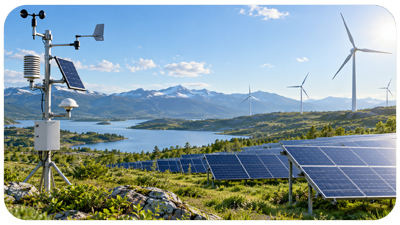
Energy and Environmental Monitoring
IoT gateways support emissions monitoring, smart grids, renewable energy systems, and remote utility infrastructure. In oil and gas operations, they can collect data from both legacy and modern sensors to identify leaks or abnormal emissions. They may also trigger local shutdowns when necessary. In smart grids, gateways help monitor energy assets, manage data flows, and strengthen cybersecurity across distributed systems.
FAQs about IoT Gateways
Q: What is the difference between an IoT Gateway and a router? |
| An IoT gateway connects sensors, machines, and local device networks to cloud platforms, often translating protocols and processing data. A router mainly forwards network traffic between devices and networks using IP addresses. Unlike a router, an IoT gateway may filter data, run edge applications, manage devices, and support legacy protocols. |
Q: What does an IoT Gateway necessarily provide? |
| An IoT gateway necessarily provides connectivity between local devices and another network, usually a cloud platform or central server. At minimum, it receives device data and forwards it. Most gateways also provide protocol translation, security controls, local processing, data buffering, and remote device management, depending on their design and application. |
Q: What are the different types of IoT Gateways? |
| Common types include industrial IoT gateways, LoRaWAN gateways, cellular gateways, and edge computing gateways. Industrial models connect factory equipment and legacy machines. LoRaWAN gateways support long-range, low-power sensors. Cellular gateways use mobile networks for remote connectivity, while edge gateways perform advanced local analytics, automation, or artificial intelligence processing capabilities locally. |
Q: What is the main advantage of an IoT Gateway? |
| The main advantage of an IoT gateway is its ability to connect diverse devices securely while processing data before it reaches the cloud. This reduces bandwidth, lowers operating costs, improves response times, and supports offline operation. It also allows legacy equipment and incompatible protocols to function within one IoT ecosystem. |
Find the Best IoT Gateway Solutions, Only at AAEON
AAEON delivers reliable IoT gateway devices designed to connect equipment, process data at the edge, and support secure communication across industrial environments. The flexible hardware, broad I/O options, and scalable connectivity we offer helps businesses modernize legacy systems and build efficient IoT deployments.
Explore our industrial IoT solutions to find the right platform for your application, or contact AAEON today to discuss performance, customization, and integration requirements with its experienced team.





close
We’re just a message away! Let us help with your needs.
Get a Quote