


- Resources
- Application Stories
- RICO-3399 Self Checkout App Story
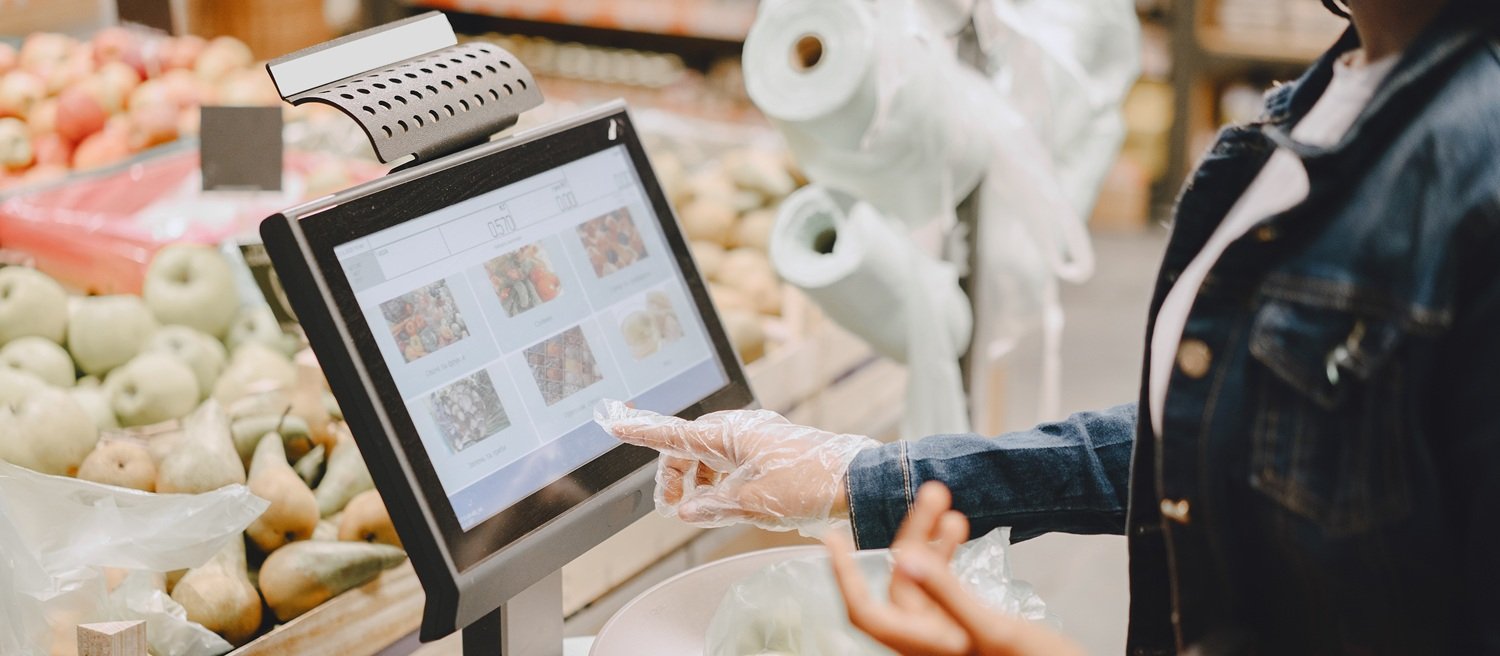
Self-Checkout Lanes have helped improve the convenience of shopping for both consumers and retailers. Consumers can avoid waiting in long lines, and retailers can increase the throughput of checkout lanes without the need of additional staff. Together this means an improved shopping experience for consumers, retailers, and staff.
Despite the convenience for customers and retailers, self-checkout systems are often the largest source of loss caused by shoplifting. Loss prevention at self-checkout lanes relies on equipment which can be inaccurate or frustrate shoppers with false alerts. Staff are often too busy assisting customers to be able to keep a sharp eye out for shoplifters taking advantage of the self- checkout machines.
One company is developing an AI powered solution for loss prevention in self-checkout systems. Utilizing behavioral analysis and object detection, the system uses two cameras—one above the customer to analyze body movements and another pointed at the barcode scan area to confirm items are scanned by the barcode reader—to determine if an item wasn’t scanned. The system can even tell if a shoplifter places an item into their pockets. With edge computing operation, the system can detect shoplifting behaviors in real-time and alert in-store loss prevention staff.
Challenges
The company needed an embedded board that could overcome several key challenges: capable of AI processing, support for multiple camera inputs, connect with checkout equipment, and integrate with in-store networks.
AI Capable
The company needed a board capable of operating the company’s AI software without reliance on extra hardware or connecting to a cloud service. This helps keep maintenance costs low and allows for real-time analysis.
Multiple Cameras
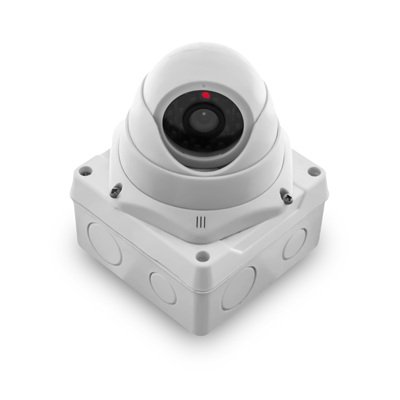
To effectively catch shoplifters and prevent loss, the company’s AI application relies on analyzing input from two separate cameras. This means the hardware solution must be capable of supporting multiple camera inputs.
I/O Support
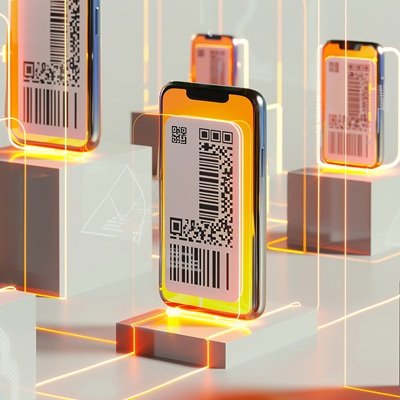
To appeal to retailers, the system has to function as both loss prevention and self- checkout system. This requires hardware support for typical checkout features such as a barcode reader, weight scale, distance sensor and interactive display.
Solution
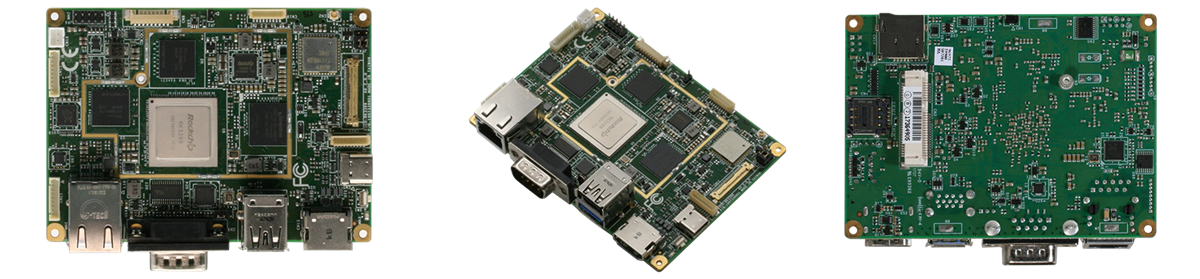
With industry leading expertise in embedded AI@Edge solutions, the company turned to AAEON to help find a hardware solution to meet their challenges. Working closely with the company, AAEON determined the RICO-3399 PICO-ITX fanless board as the best solution. The RICO-3399 features powerful processing, flexible I/O support, 4K HD graphics capability and easy network integration.
Rockchip RK3399 SoC
The RICO-3399 is powered by the Rockchip RK3399 ARM hexacore SoC processor. Using the latest in RISC technology, the Rockchip RK3399 pairs the Rockchip Cortex A72 dual core and Cortex A53 quad core processors to provide high-performance computing capable of running AI inferences without the need of a dedicated neural network module.
Flexible I/O Features
The RICO-3399 can host multiple cameras, supporting USB and MIPI standard. It also features COM and GbE ports as standard to connect to other devices and networks. AAEON also offers OEM/ODM support, with options to configure I/O features to meet the specific needs of a developer’s project.
4K Graphics Support
The RICO-3399 with Rockchip RK3399 SoC features the Mali-T860 GPU. The Mali-T860 GPU is 50% faster than previous generations, allowing it to display 4K graphics at 60Hz with HDMI 2.0 support. This enables the RICO-3399 to support high-quality interactive displays and high-resolution video encoding and decoding.
Easy Integration
The RICO-3399 can easily integrate into any network or workplace. Designed with a GbE LAN port standard, it also features a mini- PCIe slot which can support Wi-Fi, Bluetooth and even 4G LTE connectivity.
Impact
With the RICO-3399 PICO-ITX fanless board from AAEON, the company had a hardware solution capable of overcoming the challenges and requirements of their AI system. The company is now able to design, build and deliver intelligent self-checkout systems to retailers around the globe.
With the company’s system in place, retailers are able to reduce loss related to self-checkout lanes and quickly identify would be shoplifters. Shoppers can also look forward to fewer frustrations when using self-checkout systems, and staff can focus their attention more towards assisting their consumers.





close
We’re just a message away! Let us help with your needs.
Get a Quote