


- Resources
- Application Stories
- RTC-710AP In-Field Equipment Testing
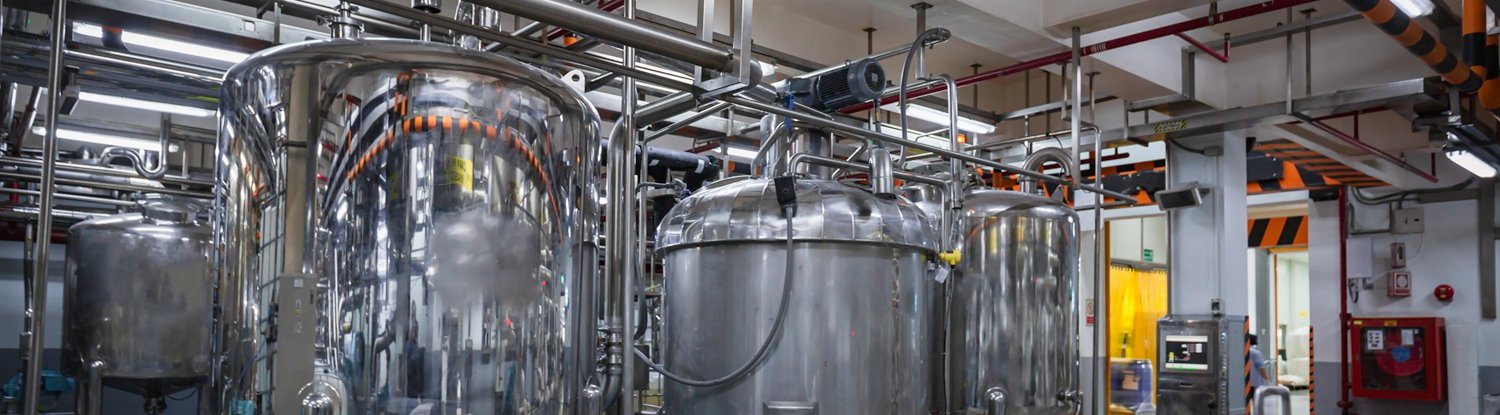
When it comes to industrial equipment maintenance, monitoring equipment health to anticipate potential issues is crucial. A time-tested method for assessing the health of machinery in such a setting is through vibration analysis, which provides insights into the operability of machinery and rotating assets like motors, pumps, and fans.
A leading provider of monitoring instruments for industrial monitoring sought to upgrade its portable industrial vibration analysis unit. Given its extensive portfolio of compact, rugged tablets, the company turned to AAEON for help.
The Tests of On-Site Testing
Because the client would be deploying their equipment monitoring unit in a wide variety of industrial environments, the project called for a robust computing unit that was also compact and portable. This meant that the device selected to power the client’s monitoring unit not only needed to meet the technical specifications necessary to execute tasks like data analysis, visualization, and on-site diagnostics, but also possess the physical resilience to operate in harsh conditions.
As one of the primary selling points of the client’s end product was its combination of portability and versatility, the chosen platform needed to be compact and lightweight while also supporting interfaces capable of high-speed data transmission. Meeting such a requirement becomes even more challenging when accounting for the fact that it needed to operate continuously for extended periods in the field.
Why the RTC-710AP?
Rugged, Tough Hardware
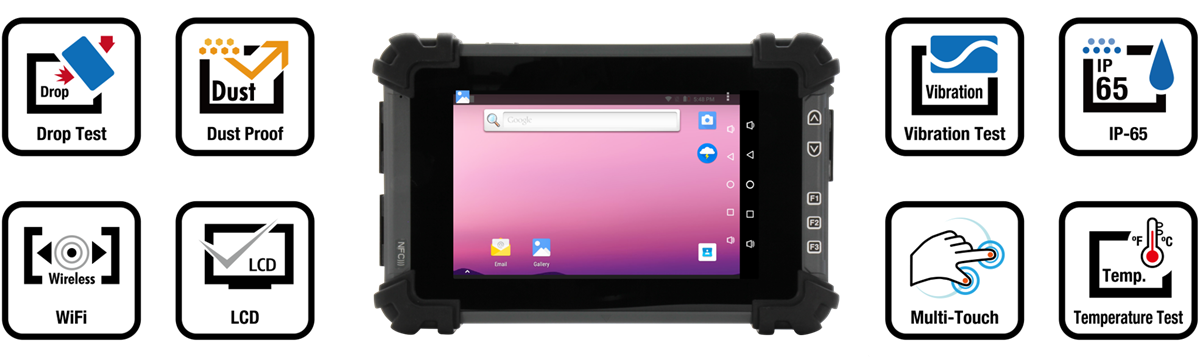
With the customer’s project requirements, there was no better fit than AAEON’s RTC-710AP. Built to thrive in demanding environments, the RTC-710AP contained a unique combination of rugged performance and versatile connectivity that made integrating it into the customer’s equipment monitoring unit easy.
To ensure it could cope with the industrial settings the application would be deployed in, the RTC-710AP boasted MIL-STD-810G standards for humidity, vibration, and drop resistance, making it an exceptionally durable option. Moreover, the tablet’s IP65 rating gave the customer peace of mind in knowing that it would reliably operate in the field, given its protection against water and dust ingress. As such, the targeted deployment premises (factories, power plants, and other industrial settings) would not pose a threat to the system as a whole. The same can be said for its ability to withstand extreme temperatures, with the tablet boasting an operating temperature range of -20°C to 50°C.
A Balance Between Connectivity & Efficiency
While other tablets could offer the customer greater processing power, the RTC-710AP's Intel® Pentium® N4200 processor was considered the right fit for the task at hand. The quad-core, 6W CPU could deliver the necessary computing power for the vibration analysis algorithms the customer had developed, while maintaining a low energy footprint. Moreover, the RTC-710AP's 128GB of eMMC storage provided sufficient space to handle the high-resolution waveform data needed for engineers to review and analyze trends over extended periods without increasing power consumption through the installation of additional modules.
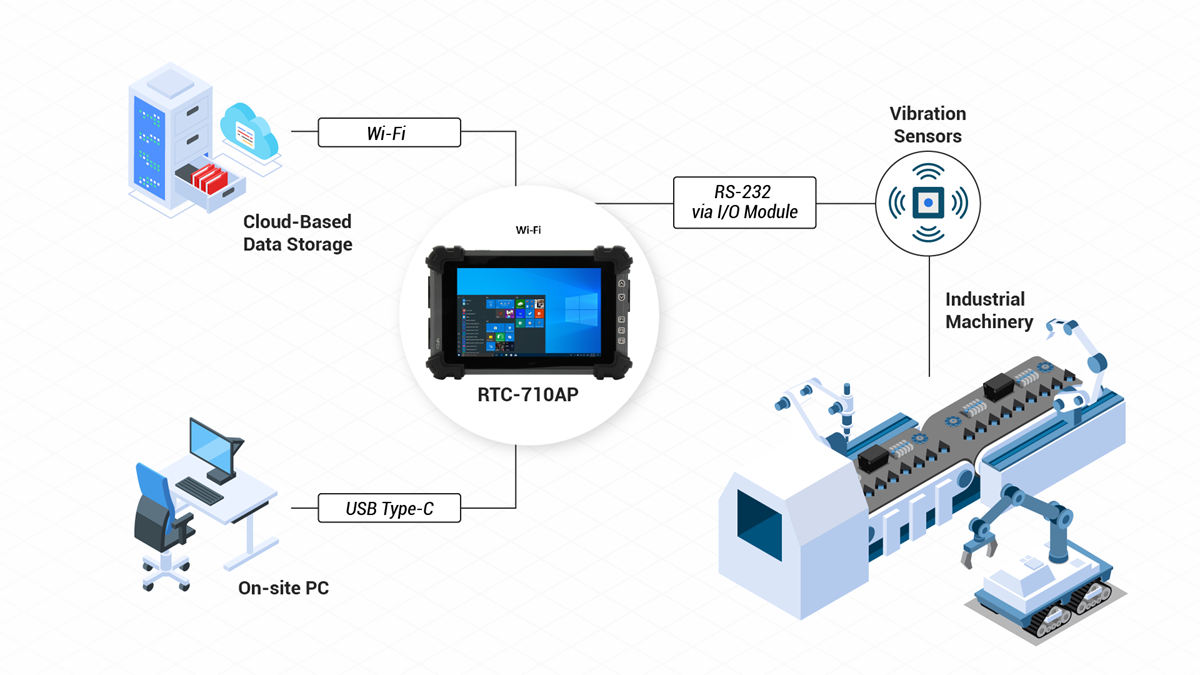
Connectivity was another big selling point for the RTC-710AP, with its I/O equipped with a handy USB 3.2 Gen 1 (Type-C) port to allow technicians to transfer data from the tablet to PCs. Further to this, the tablet provided an optional I/O module capable of hosting a COM port for RS-232 signals, through which sensors could be integrated. This feature added particular value with respect to the customer’s need for versatility, as it allowed for compatibility with a broader range of industrial monitoring equipment. Meanwhile, Wi-Fi and Bluetooth capabilities enable real-time data transmission and remote diagnostics, improving efficiency in the field.
Reliable Operation – Anytime, Anywhere
There is a lot to be said for user friendliness when discussing in-field devices, as technicians using the monitoring unit needed its hardware to be portable and responsive in an array of locations. As such, the tablet’s 700 nit, 7" projected capacitive multi-touch screen provided a crisp visual display.
Additionally, the RTC-710AP's 32.7W lithium-ion battery offered an impressive eight-hour battery life, while an additional 11.3W hot-swappable battery meant the unit could operate without interruption during extended periods, preventing downtime.
Application Architecture
A Scalable Solution for Predictive Maintenance
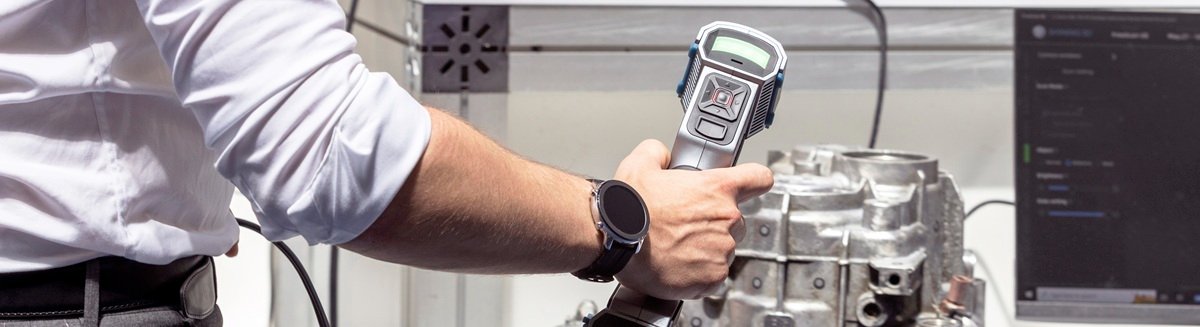
By choosing the RTC-710AP as the foundation of its portable vibration analysis system, the client successfully brought a rugged, efficient, and user-friendly tool to the industrial maintenance market, without having to sacrifice any of their desired specs. The tablet’s unique combination of high onboard storage, robust industrial interfaces, and extreme durability gave the client an ideal platform for data-driven predictive maintenance, whatever the job.





close
We’re just a message away! Let us help with your needs.
Get a Quote